PLC troubleshooting for maintenance teams

By Blue Ridge Electric Service

Find what’s stopping your line.

Trace supported Rockwell logic to the blocking condition, see the cited rung, and give your team a clear next check.

A control cell is one machine and its controls: a pump skid, a conveyor section, a packaging machine. The pilot proves the workflow on one of yours.

Rockwell-first. Read-only. Scheduled engineer review.

Sample demonstration · simulated review · no customer PLC connected
QuestionWhy will Pump 4 not start?
Sample findingThe LS-104 low-low input is blocking the start permissive in the supplied sample snapshot.
Next checkCompare the LS-104 field indication with the documented input state — terminal X2-17, slot 4 channel 7 — under the approved read-only procedure.
StatusBlocking condition established for the 2026-08-29 14:12Z sample snapshot; physical root cause not yet established.
Source evidence and incident detail
IncidentINC-PT104-001
TargetP104_START_PERM
Blocking chainP104_START_PERM ← LS_104_LLO ← LS-104 field switch
Cited rungRoutine P104 · rung 27 · L5X sample export BRPLC-PT104-V12
Evidence observed2026-08-29 14:12Z sample tag and drive exports

Static logic establishes dependencies and candidate blocking conditions; only timestamped state evidence can establish an actual blocking condition. The trace names the exact check to make next.

PLC fault troubleshooting

A stopped line with the answer in the logic. The 90-day pilot proves cited, field-verified fault tracing on one of your cells.

Technical scope, briefly

Rockwell ControlLogix and CompactLogix cells, ingested from an L5X export. Read-only always: no writes, forces, downloads, or bypasses, and no live controller connection. Non-safety-critical cells only. Answers are deterministic and cited to the exact rung; a controls engineer reviews on a scheduled basis.

Industrial Ethernet, fiber & cabling

Recurring communication faults or undocumented cabling serving production equipment, scoped, tested, and documented by the same shop.

What this covers

Physical connections serving PLCs, drives, HMIs, and switches: inspected, tested, and documented against what is actually installed. Fiber inspection, cleaning, testing, and repair where scope and qualified personnel support it. Unknown connections are marked unknown, never guessed. Scope, technician fit, and availability are confirmed before scheduling.

Where this fits

Three situations your team already knows.

The line is stopped and the answer is in the logic

A packaging line won’t cycle. A pump won’t start. A drive sits ready but the permissive chain says no, and someone is reading ladder rungs under pressure. BlueRidgePLC traces the supported logic to the blocking condition and cites the exact rung, so the first check happens in minutes, at the right terminal.
The same fault keeps coming back

The guard-door fault clears, returns, clears again. Each visit starts from zero because the last diagnosis lived in someone’s head or a contractor’s notebook. Every incident in the pilot cell keeps its trace, its cited rungs, and its field evidence, so the repeat fault starts from what was already proven.

One experienced person holds the answers

The veteran who can read the press logic by heart is retiring, or simply not on shift. That know-how is worth preserving, not replacing. BlueRidgePLC makes the cell’s logic legible to the whole team, with the senior technician’s judgment captured in reviewed scenarios.

Guided incident demonstration

One fault, traced end to end.

This is the PT-104 sample pump cell: sanitized deterministic sample evidence and a simulated review, not a customer PLC. Follow incident INC-PT104-001 the way your team would: ask the question, read the finding, verify in the field.

The question, as a technician would ask it · sample demonstration

No special syntax. Edit it: the engine resolves equipment names against the loaded sample project, or says it cannot. Try “Pump 99”.

Supported target resolved
IncidentINC-PT104-001
Target tagP104_START_PERM
CellPT-104 · PT104_Lab_PLC (sample)
Logic sourceL5X sample export · read-only

The PLC pilot

The PLC First Response Pilot, delivered in four steps.

Ninety days, one control cell, one fixed price. Success is measured the way we agreed at the start: the five engineer-reviewed acceptance scenarios, answered by your team, verified in the field.

01

Qualification & evidence setup

We confirm your cell qualifies: non-safety-critical Rockwell, with an L5X export your controls person or integrator can provide. The export is ingested into a plant-specific workspace. If the cell doesn’t qualify, we say so before anyone invoices anything.

Your effort: one L5X export and a walkthrough conversation.

02

Scenario review

Together we pick five acceptance scenarios: real fault questions your team actually faces. A controls engineer reviews each trace against the logic before your team ever relies on it.

Your effort: one review session with the people who know the cell.

03

Team use & field verification

Your technicians (2–5 accounts) work live incidents in the workspace and verify cited answers at the cabinet with Mobile Field Check: observe-and-record tasks with explicit stop conditions.

Your effort: normal incident response, with the tool alongside.

04

Final results review

We review the five acceptance scenarios against what actually happened, hand over the incident history and the final results report, and discuss what, if anything, comes next.

Your effort: one closing review. The report is yours either way.

90-day founding-plant pilot
Fixed price$24,000for 90 days · one qualified control cell

Scope and cell eligibility are confirmed before kickoff. If your cell doesn’t qualify, we tell you before anyone invoices anything.

Engineer review is scheduled within the business scope agreed at qualification. This is not a 24/7 emergency service.

What the pilot includes

  • One qualified, non-safety-critical Rockwell control cell
  • L5X ingestion and control-graph creation
  • A plant-specific workspace for your cell
  • 2–5 technician accounts
  • Five engineer-reviewed acceptance scenarios
  • Mobile Field Check for your own technicians
  • Incident history for the pilot cell
  • Scheduled human controls-engineer review
  • A final results report you keep either way
Scope boundaries, stated plainly

L5X logic ingestion only: other formats are evidence packs, received and cited, not parsed into logic. Rockwell first: other platforms are not supported today. Read-only always: no PLC writes, forces, downloads, bypasses, or setpoint changes. Deterministic by default: answers are engine-derived and cited to the rung. No safety-instrumented systems. Engineer review is scheduled, not 24/7.

How the work progresses

  1. Scoped assessment or qualified PLC pilot. Every engagement starts with a defined scope: the fixed-price pilot for a qualifying cell, or a scoped assessment for network and cabling work.
  2. Separately quoted field remediation. If the work uncovers something that needs hands-on correction, that field work is quoted separately, after scoping. It is never bundled silently into the pilot.
  3. Optional ongoing record maintenance. Keeping your cell’s records current with scheduled reviews is an option discussed during qualification, with scope and terms confirmed separately. Nothing renews automatically.

You own and can export every report your engagement produces, pilot or otherwise.

Illustrative economics: your numbers, not ours

Enter a downtime cost per hour above to see the break-even point. No values are assumed for you.

Assumptions shown: pilot price $24,000 for 90 days; the savings figure is an annual rate from your inputs; downtime only, no labor, scrap, or other costs counted. Illustrative arithmetic on your own inputs, not validated or promised savings. Any future savings depend on continuation access after the pilot, ongoing costs, when stoppages actually occur, and improvement demonstrated during the pilot. Qualification confirms whether your cell fits the pilot before anyone invoices anything.

Additional field services

Industrial networks & fiber

Recurring communication faults, damaged connections, or undocumented cabling? Discuss a scoped assessment of the connections serving your production equipment.

Industrial Ethernet and machine connections

Physical connections serving PLCs, drives, HMIs, and switches: inspected, tested, and documented against what is actually installed.

Fiber inspection, testing, and repair

Plant fiber inspected, cleaned, tested, and repaired where the scope and qualified personnel support it, with measured results recorded.

Cable identification and documentation

Endpoint and port records, labels, and approved photographs, with unknown connections marked as unknown, never guessed.

Scope, technician fit, and availability are confirmed before scheduling.

Who stands behind this

Built by a shop that still answers its own phone.

BlueRidgePLC is a department of Blue Ridge Electric Service, an industrial electrical and controls service company in Winchester, Virginia. The software exists because our own field work kept hitting the same wall: plants with solid maintenance teams and no one left who could read the logic.

The pilot proves the model one cell at a time: cited, verified in the field, and honest about what the evidence can’t determine. When the evidence runs out, a human controls engineer reviews the incident on a scheduled basis.

CompanyBlue Ridge Electric Service, BlueRidgePLC department
LocationWinchester, Virginia
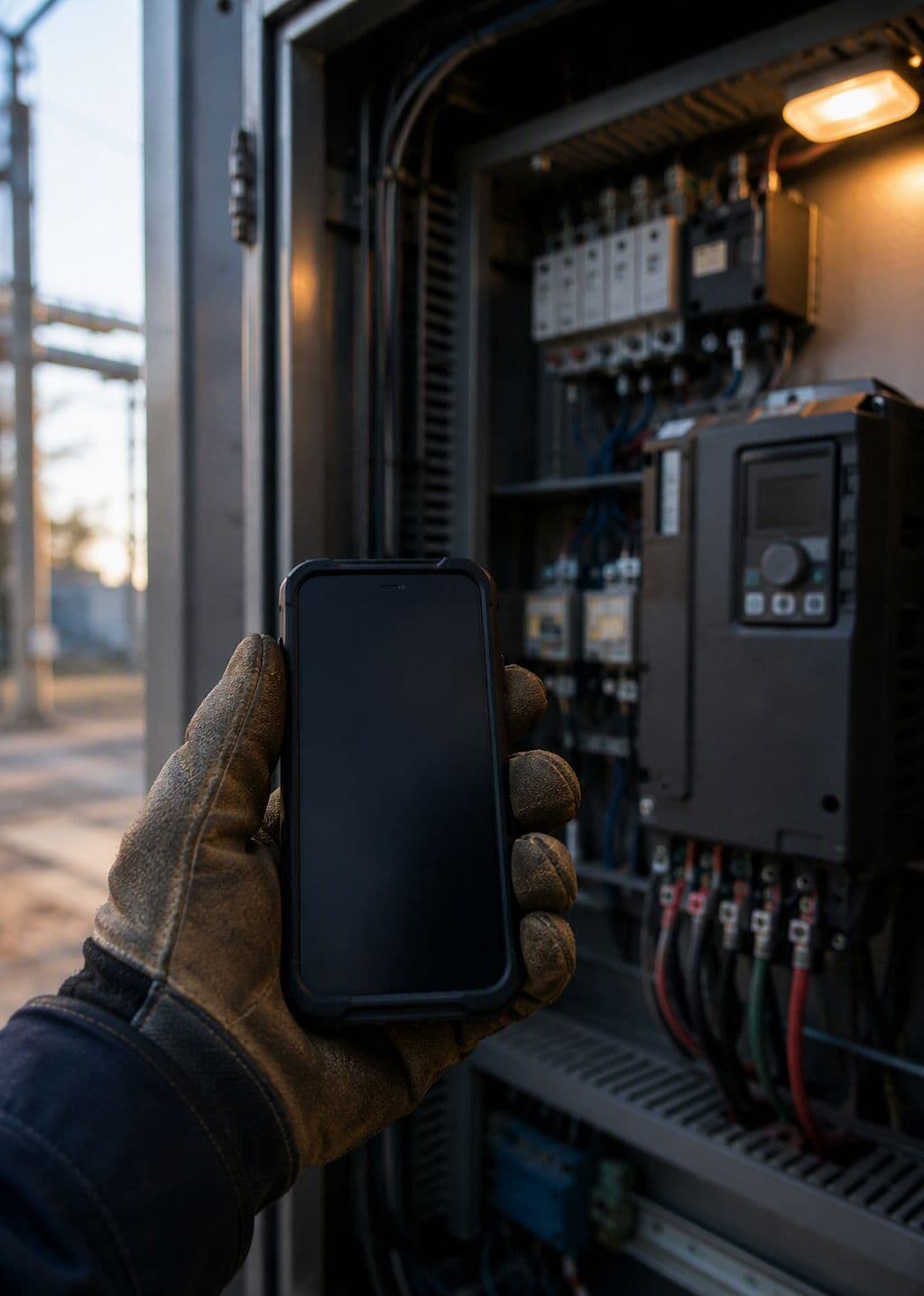
Illustrative scene: a controls technician reviewing a tablet beside a closed industrial control cabinet
Illustrative imageGenerated scene, not a Blue Ridge facility or employee

Buyer questions

Asked by every plant manager we talk to.

Straight answers, including the honest edges. Anything that depends on your plant is discussed during qualification; we don’t publish commitments we haven’t scoped.

Which controllers are supported?

Rockwell ControlLogix and CompactLogix, ingested from an L5X export out of Studio 5000. Siemens, Mitsubishi, and other platforms are not supported today. Pilot cells must be non-safety-critical; no safety-instrumented systems.

What do we need to export, and what happens to our logic?

One L5X export per pilot cell, produced by whoever holds your Studio 5000 project: your controls person or your integrator. Logic ingestion is L5X-only. Other materials (drawings, documents, photos) can be attached to an incident as evidence packs: received and cited, not parsed into logic. BlueRidgePLC is read-only software: it never writes to, forces, or downloads to a controller, and it has no live controller connection.

When is the controls engineer available?

Engineer review is scheduled, not round-the-clock. The five acceptance scenarios are reviewed before team use, and field verification results feed a scheduled review. Response timing and any on-site involvement are discussed during qualification; we don’t promise coverage we haven’t scoped with you. This is not an emergency service.

What are our responsibilities during the pilot?

Provide the L5X export, nominate 2–5 technicians, and have them use the workspace and field checks on real incidents. Your people keep every production decision; the software never authorizes work, and every field task keeps its stop conditions on screen.

What happens after the 90 days?

You keep the incident history and the final results report either way. Continuation terms and any post-pilot pricing are discussed at the final results review; nothing renews automatically and there is no obligation past the pilot.

Who keeps the records up to date after the pilot?

You can, with what you already have: every report and the incident history are yours to keep and export, so your own team can carry them forward. If you would rather we keep the cell’s records current with scheduled reviews, that is an optional ongoing service discussed during qualification, with scope and terms confirmed separately. Nothing renews automatically, and the pilot does not depend on it.

What does the software refuse to do?

It does not guess: unknown tags return a cannot-determine answer, and missing field evidence is shown as missing, never filled in. It does not touch safety systems, does not bypass interlocks, and does not give anyone new electrical qualifications. Your technicians verify; they don’t improvise.

Next step

Check my cell’s fit.

Tell us about one control cell — one machine and its controls, like a pump skid or a conveyor section. We’ll confirm whether it qualifies for the pilot, usually within two business days. A short conversation, not a commitment.

The offerPLC First Response Pilot: $24,000, 90 days
ScopeOne qualified, non-safety-critical Rockwell cell
Your team2–5 technician accounts, five reviewed scenarios

Want to see the product first? Open the full demonstration workspace or see how Mobile Field Check works.

First contact: your name and either email or phone; everything else optional
Optional: helps us qualify your cell faster

Please don’t attach logic files here. If the cell qualifies, we arrange the L5X export securely during setup.

Prefer to talk? Call 540-662-8463 and we’ll take the same details by phone.